
Your eye works a lot like a camera. Light rays focus through your lens onto the retina, a layer of light-sensitive cells at the back of the eye. Similar to photographic film, the retina allows the image to be “seen” by the brain.
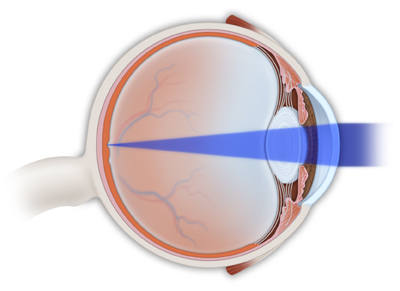
Over time, the lens of our eye can become cloudy, preventing light rays from passing clearly through the lens. The loss of transparency may be so mild that vision is barely affected, or it can be so severe that no shapes or movements are seen—only light and dark. When the lens becomes cloudy enough to obstruct vision to any significant degree, it is called a cataract. Eyeglasses or contact lenses can usually correct slight refractive errors caused by early cataracts, but they cannot sharpen your vision if a severe cataract is present.
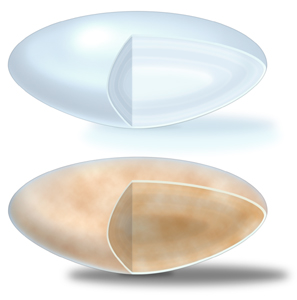
The most common cause of cataract is aging. Other causes include trauma, medications such as steroids, systemic diseases such as diabetes, and prolonged exposure to ultraviolet light. Occasionally, babies are born with a cataract.
Cataracts typically develop slowly and progressively, causing a gradual and painless decrease in vision. Other changes you might experience include blurry vision; glare, particularly at night; frequent changes in your eyeglass prescription; a decrease in color intensity; a yellowing of images; and in rare cases, double vision.
Cataracts overview
As the eye’s natural lens gets harder, farsighted (presbyopic) people, who have difficulty focusing up close, can experience improved near vision and become less dependent on reading glasses. However, nearsighted (myopic) people tend to become even more nearsighted, resulting in a worsening of their distance vision. Some kinds of cataracts affect distance vision more than reading vision. Others affect reading vision more than distance vision.
Reducing your exposure to ultraviolet light by wearing a wide-brimmed hat and sunglasses may reduce your risk of developing cataracts. Still, once one has developed, there is no cure except to have the cataract surgically removed.
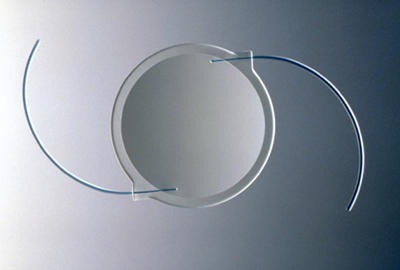
With a routine, outpatient surgical procedure, an ophthalmologist (Eye M.D.) can remove the cataract, making either a small incision (phacoemulsification) or a larger incision (extracapsular extraction). Usually, a synthetic intraocular lens (IOL) is inserted at the time of cataract extraction to replace the focusing power of the natural lens. IOLs can be monovision (fixed-focus for a preset distance), multifocal (allowing focused vision at multiple distances), and now Extended Depth of Focus, providing excellent potential vision from distance to intermediate and near if balanced correctly between the two eyes. The ideal time for cataract surgery is when the cataract is significantly affecting your vision, interfering with your everyday lifestyle.
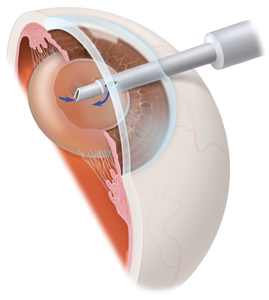
Cataract surgery is a very successful operation. One and a half million people have this procedure every year in the United States, and 95% have a successful result. As with any surgical procedure, complications can occur during or after surgery, and some are severe enough to limit vision. But in most cases, vision, as well as quality of life, improves.
Glaucoma: mictro-incision cataract surgery
(c) 2007, 2025 The American Academy of Ophthalmology & 2015 Robert M. Schertzer, MD