
What is it and what to expect?
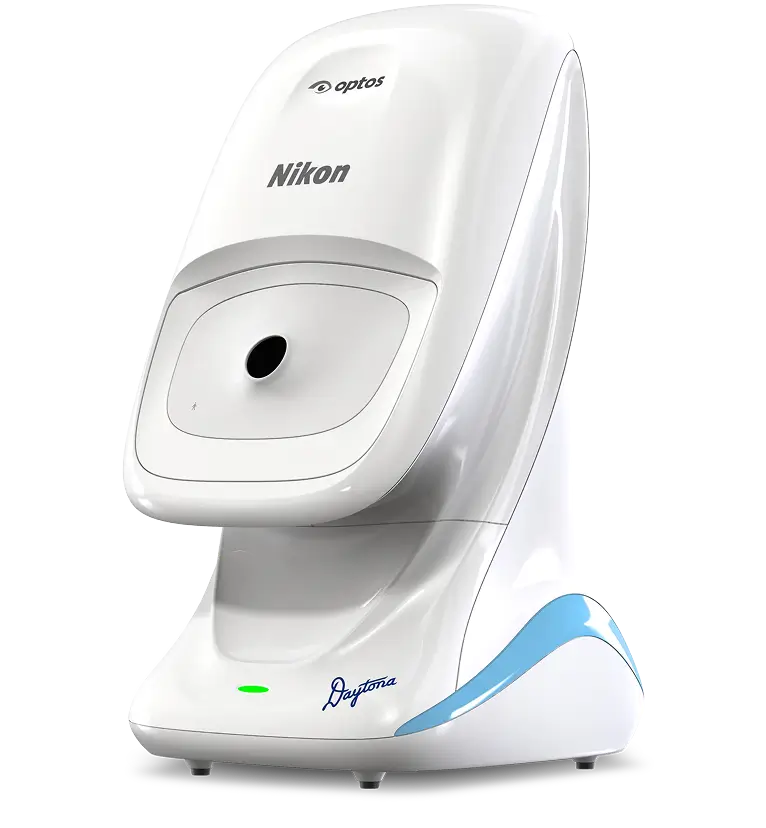
Optos ultra-widefield retinal imaging (also called an Optomap image) is a special picture of the back of your eye. It helps eye doctors find and treat eye problems that can start in the outer edges of the retina. Some of these problems can be hard to see with regular eye exam tools.What is an Optomap image?
An Optomap is a picture of the retina, which is the inside back part of your eye. It is the only place in your body where doctors can see your blood vessels directly.
Sometimes, signs of other health problems — like stroke, heart disease, high blood pressure, or diabetes — can also show up in the retina. These signs may appear before you notice any symptoms.
During most eye exams, doctors check the front of your eye and your glasses or contact lens prescription. But taking a picture of your retina is very important to make sure your eyes are healthy overall.
What is the test like?
Optomap imaging is fast, safe, and easy for both kids and adults.
To take the picture, you simply:
-
Sit in front of the machine
-
Look inside it with one eye at a time (like looking through a keyhole)
-
See a quick flash of light
That’s it! The image is taken in just a moment.
Benefits of an Optomap image
-
Helps protect your vision by finding problems early
-
Can help detect serious diseases early
-
Gives doctors a much wider view of your retina than traditional exams
-
Finding problems early means treatment can start sooner, which helps protect both your eyesight and your health
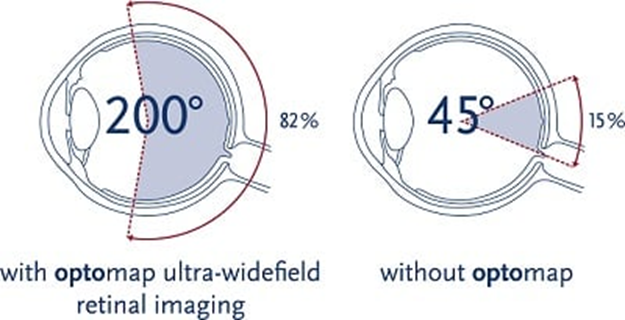
45-degree vs 200-degree retinal images
-
A 45-degree image shows a smaller, more central part of the retina
-
A 200-degree image shows much more of the retina, including the outer edges where some diseases first begin
Because it shows more area, the wider image can help doctors find problems earlier
 ©2026 By Dr. Robert Schertzer Inc. using ChatGPT to simplify information from Optos website
https://www.optos.com/blog/2022/june/what-is-optos-retinal-imaging
©2026 By Dr. Robert Schertzer Inc. using ChatGPT to simplify information from Optos website
https://www.optos.com/blog/2022/june/what-is-optos-retinal-imaging