
Herpes keratitis is a viral infection of the eye caused by the herpes simplex virus, best known for causing cold sores. Herpes keratitis usually affects only one eye and most often occurs on the cornea—the normally clear dome that covers the front part of the eye.
The symptoms of herpes keratitis may include:
- pain;
- redness;
- blurred vision;
- tearing;
- discharge; and
- sensitivity to light.
If the infection is superficial, with ulcers involving only the cornea’s top layer, called the epithelium, it will usually heal without scarring. However, if it involves the deeper layers of the cornea, it may lead to scarring of the cornea, loss of vision, and sometimes even blindness. Left untreated, herpes keratitis can severely damage your eye.
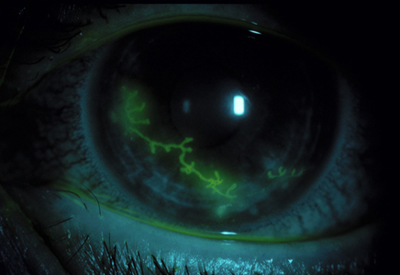
Herpes keratitis is usually treated with antiviral medications, either in eyedrop or pill form. Depending on the progression of the infection, your ophthalmologist (Eye M.D.) may treat your condition with steroid eyedrops to reduce inflammation. Rarely, when the cornea is severely damaged, a corneal transplant may be necessary to improve vision.
(c) 2007 The American Academy of Ophthalmology